Vegan Challah
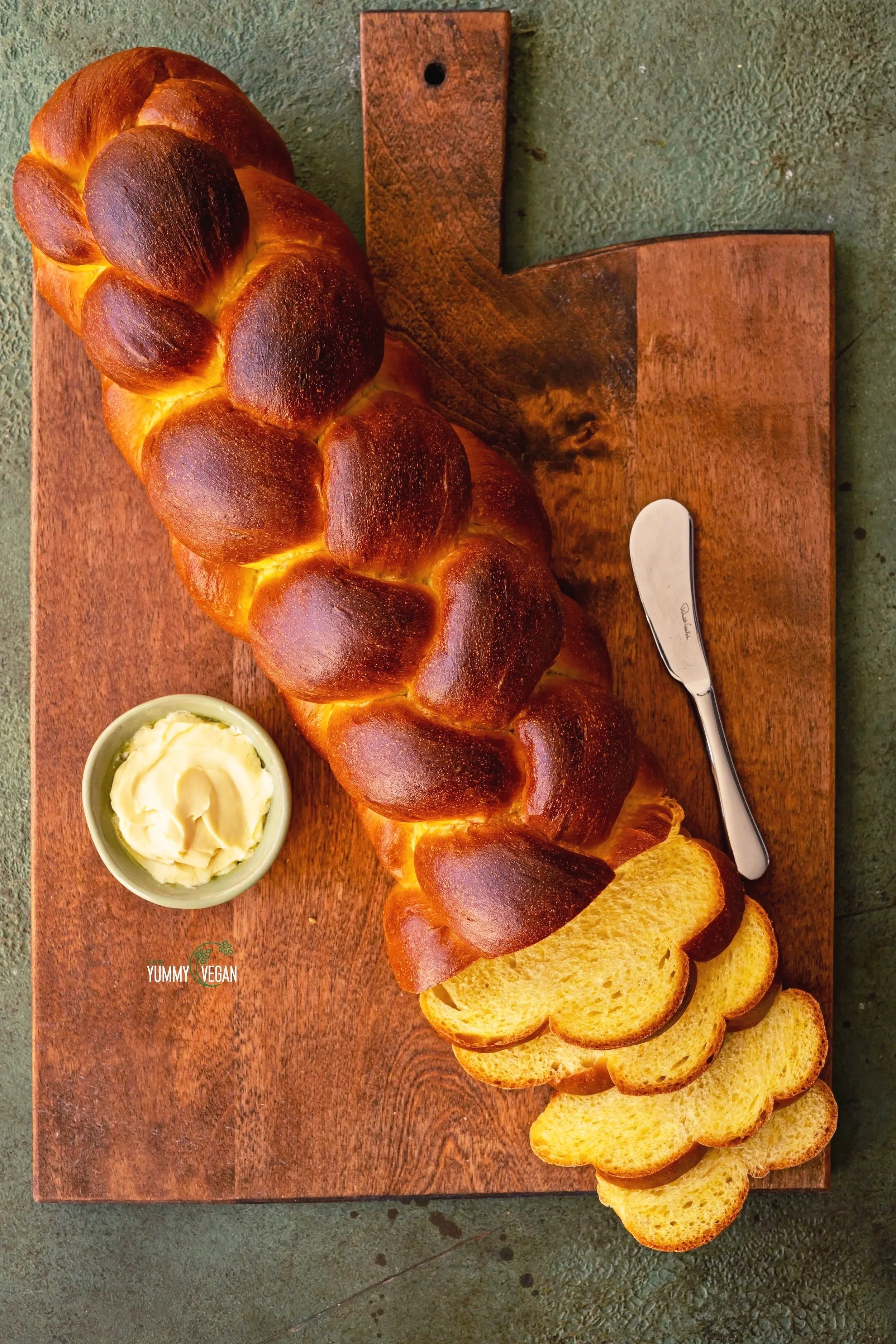
Vegan Challah
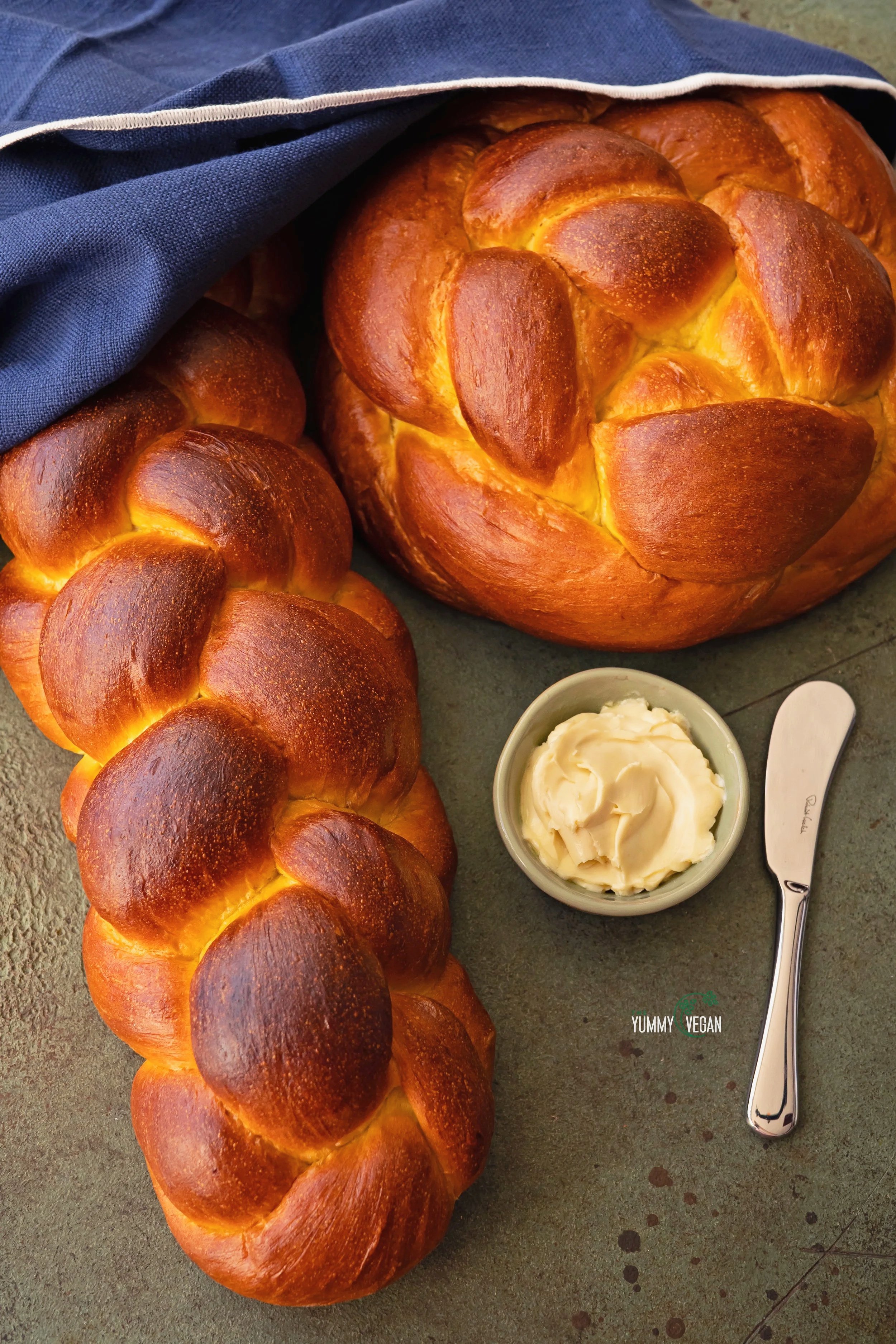
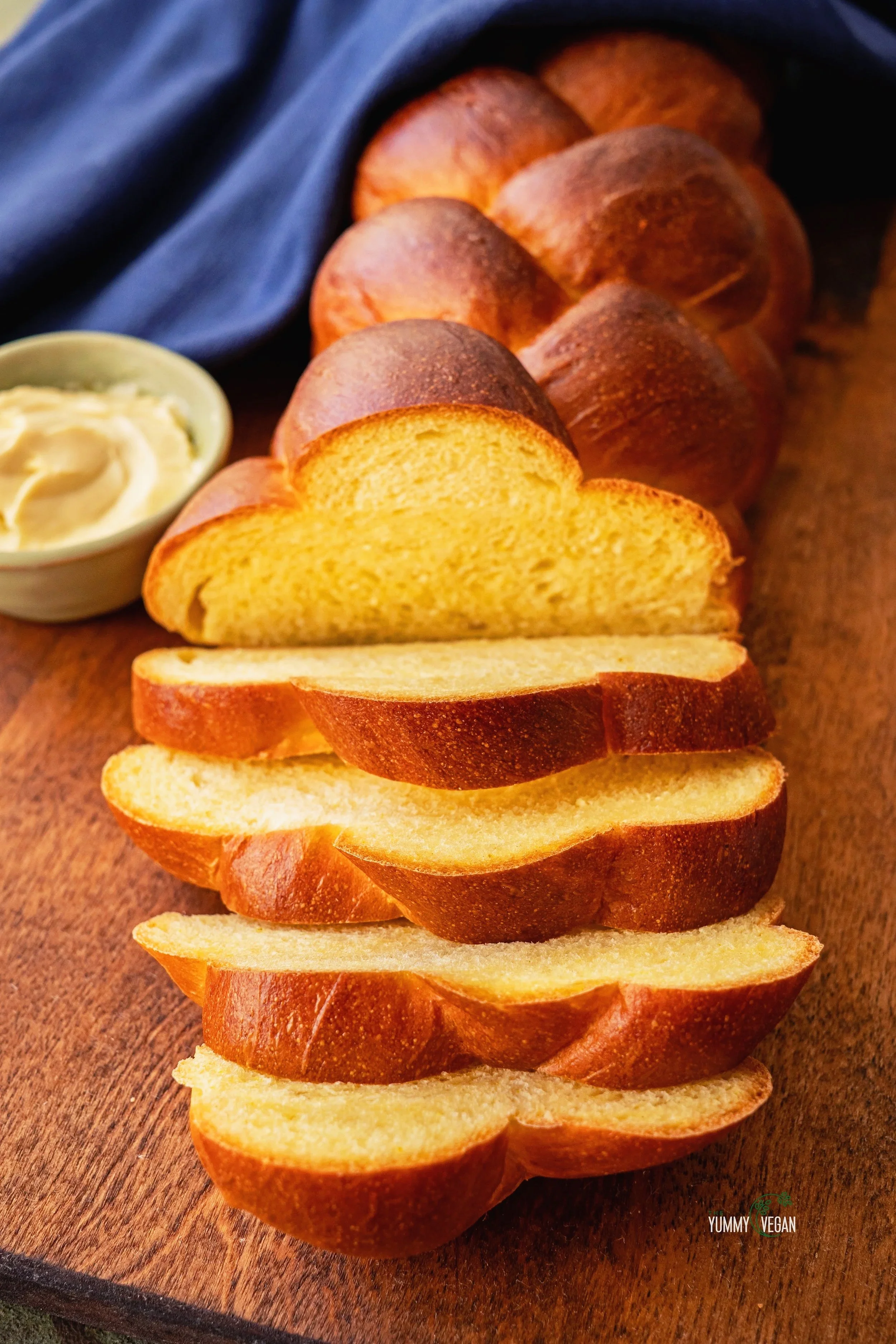
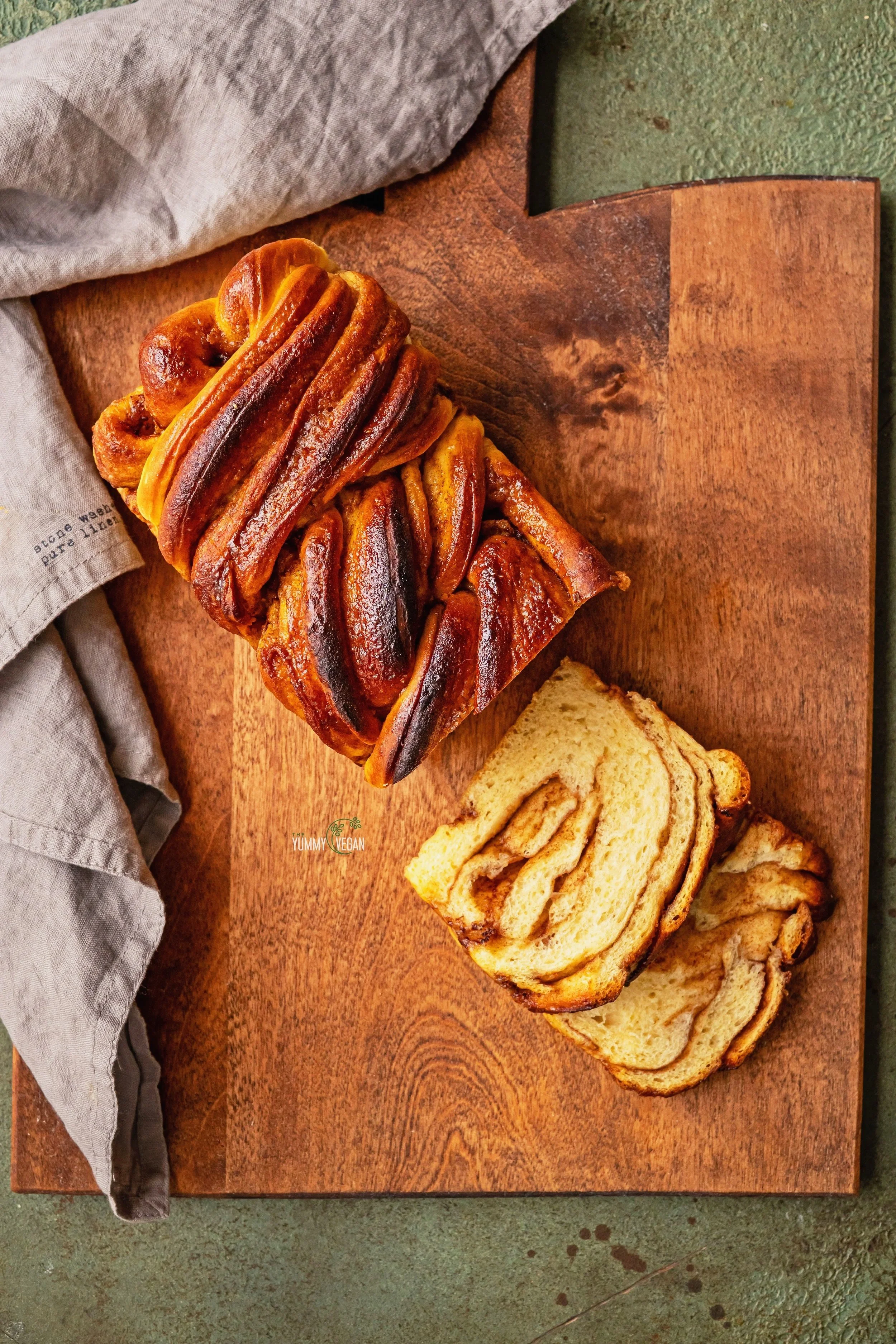
This light, fluffy braided bread is the quintessential Jewish loaf enjoyed on the Sabbath and holidays. Traditionally made with oil instead of butter, it’s naturally dairy free, though many recipes include eggs. I grew up eating egg challah and wanted to recreate that experience in a vegan version. Water challahs are made without eggs, are already vegan and don’t require an egg wash. Still, I love the warm golden hue of an egg challah, so I add a pinch of turmeric to achieve that color.
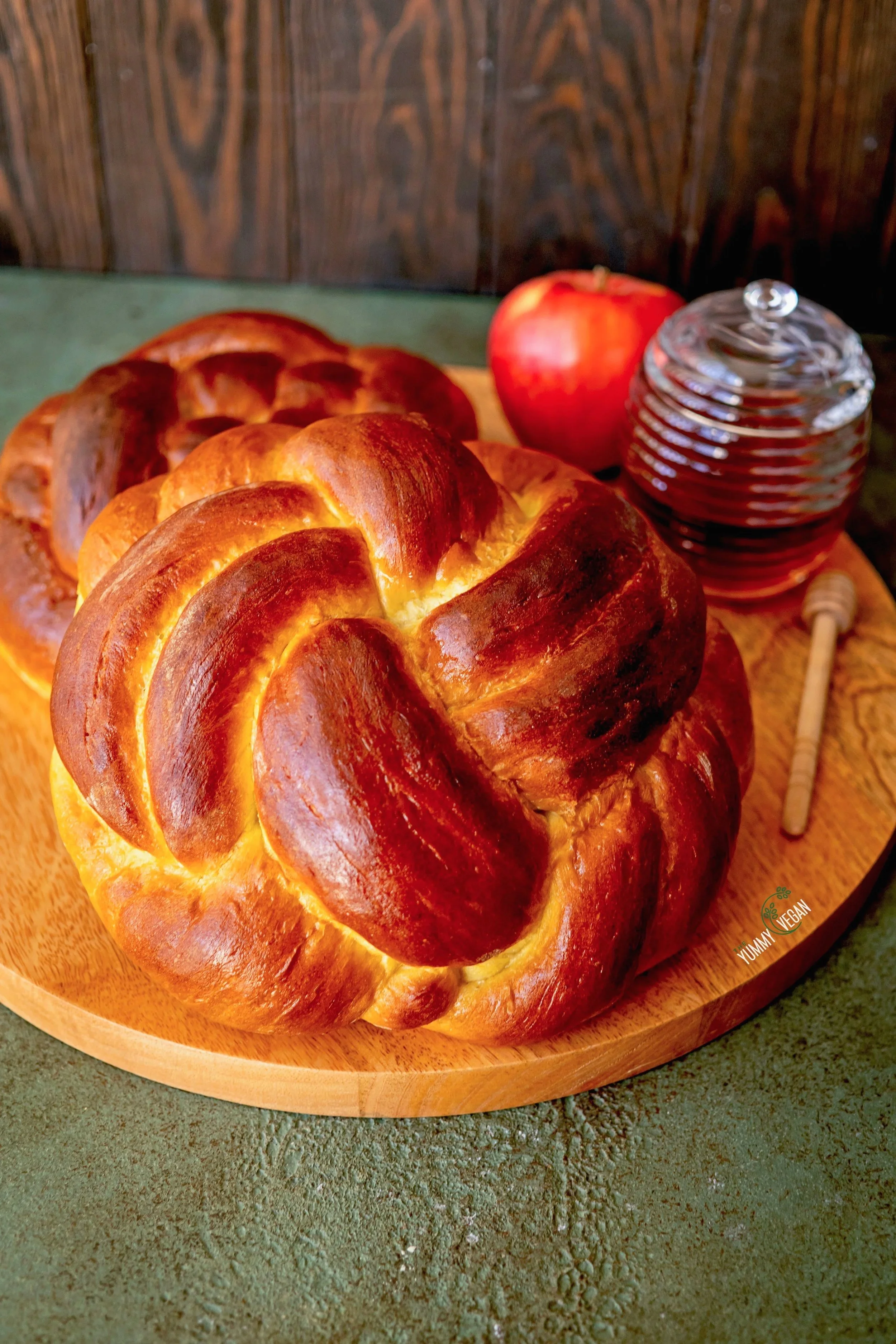
There are countless ways to braid challah, including a special round version traditionally enjoyed during the holiday of Rosh Hashanah. Just as a circle has no beginning or end, its shape symbolizes a wish for continuous, unlimited blessings and a sweet, complete year ahead.
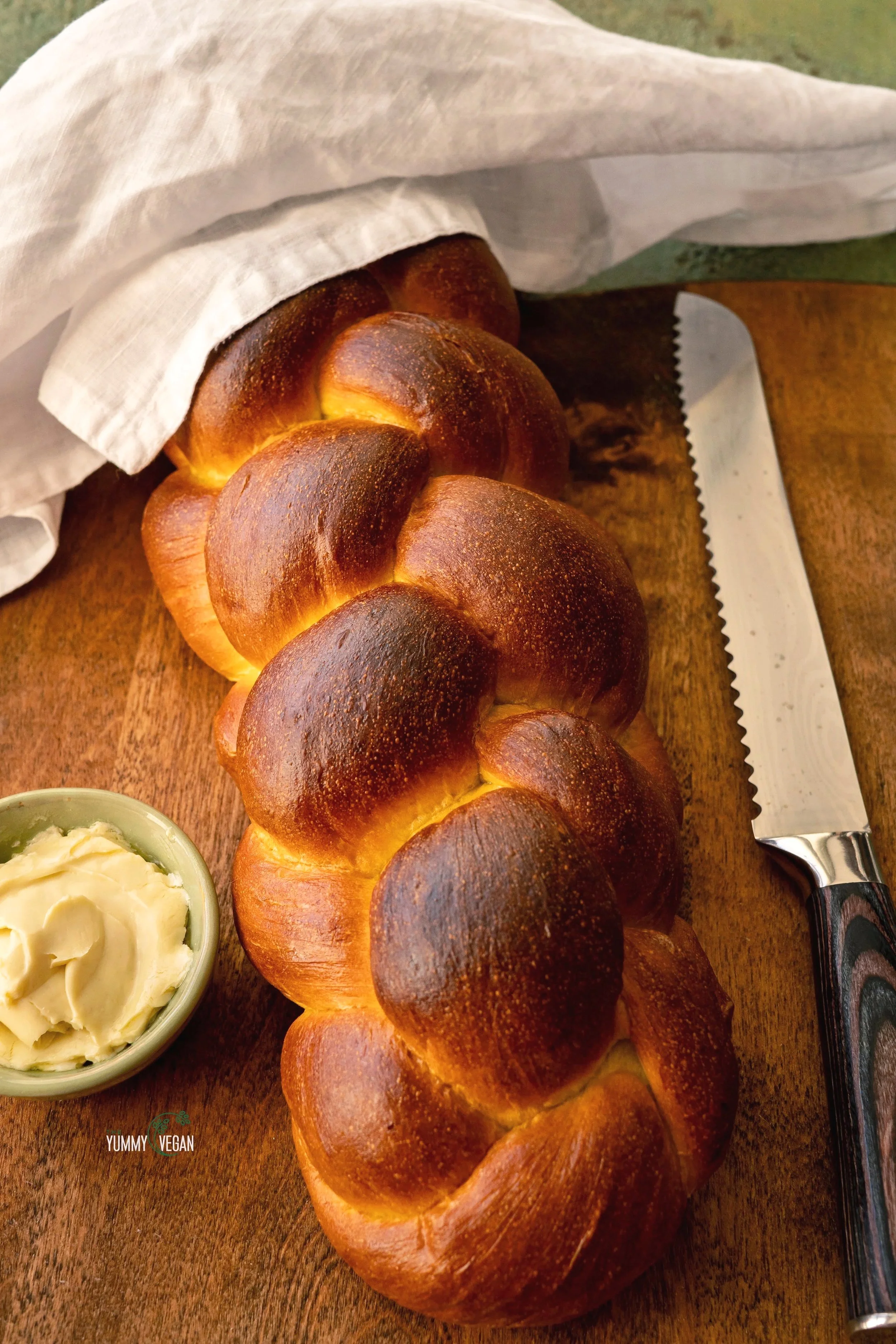
A simple and beautiful place to start is with a classic three strand braid. For a little more depth you can braid with four strands. Below, are two a quick tutorial videos. One demonstrating how to braid a four-strand challah and the other a simple four strand round.
You can also find many variations on YouTube which I highly recommend exploring. I’ve watched (and rewatched) quite a few myself!
Makes 2 large loaves (about 700g each)
Ingredients
848g (about 6 1/2 cups) Bread Flour
398g (1 3/4 cups) Water
14g (3 1/2 tsp) Active Dry Yeast
45ml (3 Tbsp) Olive Oil or Neutral Oil
53g (3 1/2 Tbsp) Butternut Squash Purée
67g (1/3 cup) Cane Sugar
9g (1 1/2) tsp Salt
1/4 tsp Turmeric
Wash
2 Tbsp (30ml) Plant Milk
1 tsp (5g) Maple Syrup
Equipment
Stand Mixer (ideal but not necessary)
Pastry Brush
Parchment Paper
Directions
1.Heat the water to 110-115 degrees F or follow the directions on the yeast package if different from above. Add the warm water to the mixing bowl along with the yeast and 1 Tbsp of the sugar. Give it a little mix to incorporate and let sit for 10 minutes to activate. Note if there aren’t any moving bubbles then your yeast may be dead or expired.
2.Once the yeast has activated, add the remaining sugar, butternut squash purée and oil and with the paddle attachment mix together until well combined and the sugar has dissolved.
3. Add the salt to the flour and mix well. Allow the mixer to run on a speed of 2 with the dough hook attached. Add the flour mixture in and allow the mixer to knead the dough, stopping to scrape down any dough that has climbed up the hook. Continue this for 9 minutes or until the dough is smooth.
4.Turn the dough onto a clean surface and continue kneading by hand for 4 minutes. The final kneaded dough should be completely smooth and not sticky. Place the dough ball into a large bowl and cover with a cloth or cling film. Set the bowl aside to proof for 1 hour and 45 minutes.
5.Once the dough has had its first proof, punch down the dough and divide it equally in half by weight. Keep one half covered as you work with the other. Divide the dough you are starting with equally (by weight) into the number of strands you will need. Form each piece into a loose log and place them onto a lightly floured baking sheet or container that can be covered while resting. Allow the logs to rest for 20 minutes. You can repeat the process for the other half of dough that was set aside.
6. When ready to braid the challah, roll each log into a strand with tapered ends. (see video). Pinch the strands together at the top and proceed to braid them. Tuck both the top and bottom ends underneath the challah for a cleaner look.
7.Place each challah onto a lined baking sheet and cover with a clean kitchen towel. Allow them to proof for 1 hour. At 45 minutes, preheat the oven to 375F and just before baking, brush the challahs with the wash. Bake at 375 for 24-26 minutes or until the challahs are golden brown.
8.Once they have finished baking, brush them with the wash again and allow them to cool for 20 minutes before transferring them to a cooling rack to cool completely.